
The development of science among Serbs in Kosovo and Metohija began after World War II, when higher education institutions, faculties, scientific institutes and the Scientific Society were founded, which grew into the Kosovo Academy of Sciences and Arts.
At that time, Pristina became the administrative center of the autonomous Kosovo-Metohija region – all the competencies of the Republic and the Federation were transferred to Pristina, so scientific institutions in Belgrade had neither the financial nor the legal right to study Serbian culture in Kosovo and Metohija.
Among the first scientific institutions was the Institute of Albanology, founded in 1967. However, there was no analogous scientific institution for the study of Serbian culture, nor was its establishment contemplated.
The initiative to establish an institute for the study of Serbian culture in Kosovo and Metohija came from the University of Priština, which brought together a large number of doctors of science and masters from various fields of natural and social sciences, and where classes were held in both Serbian and Albanian languages.
Recognizing the necessity of establishing a scientific and research institution that would deal with the study and collection of materials from the Serbian cultural and artistic heritage, which was in danger of being forgotten, especially when it came to oral folk art, university professors, associates and scientific researchers from other institutions began a struggle to establish an institute for Serbian culture that lasted 21 years.
The Law on the Establishment of the Institute for the Study of the Culture of Serbs, Montenegrins, Croats and Muslims, which is the original name of today’s Institute for Serbian Culture – Pristina, with a temporary seat in Leposavic, was adopted by the Assembly of the Autonomous Province of Kosovo in November 1987.
The first director, and at that time the only employee at the Institute, was the writer and scholar Milenko Jevtović, who took office on 1 January 1988 and remained in that position until the beginning of 1998.
DIRECTORS AND ACTING DIRECTORS OF THE INSTITUTE FOR SERBIAN CULTURE PRISTINA – LEPOSAVIC
Dr. Milenko Jevtović, Director 1987–1997
Dr. Miloš Đorđević, Director 1997–2005
Mr. Snezana Milivojević, Acting Director 2005
Dr. Marinko Božović, Acting Director 2005
Dr. Veljko Đurić, Acting Director 2005–2008
Dr. Nenad Vasić, Acting Director 2008
Dr. Predrag Jašović, Acting Director 2008–2009
Dr. Srđan Slović, Acting Director 2009–2016
Dr. Ivan Becić, Acting Director Director 2017
Dr. Dragan Tančić, Director 2017–2024
Dr. Boris Bratina, Acting Director 2024–2025
Dr. Marija Jeftimijević Mihajlović, Acting Director 2025–
In the more specific definition of the scientific and research tasks of the Institute, the Serbian Academy of Sciences and Arts, the Kosovo Academy of Sciences and Arts, the Faculty of Philology and Philosophy in Pristina, Niš, Belgrade and Novi Sad, the Institute of Albanology in Pristina, as well as all independent scientific institutes in Belgrade and a large number of prominent scientists participated.
At that time, the idea of the Institute being a multidisciplinary scientific institution crystallized and it was decided to establish departments for the Serbian language, literature, national history, history of art, an ethnological and ethno-musicological department and a scientific and documentation center with a scientific library.
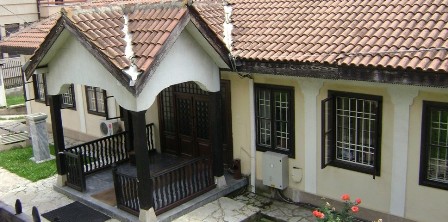
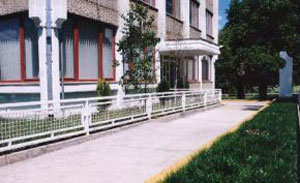
The first address of the Institute was in the very center of Pristina (two rooms in the Kosovo Museum building), and in the spring of 1989 the Institute was moved to the premises of the Provincial Science Center, near the Rectorate of the University of Pristina, where it operated in about sixty square meters until December 1990.
The Institute was then granted permanent use, by decision of the Pristina Municipal Assembly, of an old and neglected building in the church yard, where the first Serbian school from 1859 was located (2 Valjevska Street).
Based on the project of the Provincial Institute for the Protection of Cultural Monuments, the building was demolished and a new one of 850 square meters was built on its foundations. The Institute remained there until mid-1999, when it was relocated to Leposavić, where it is still located today (24. novembra bb Street).